

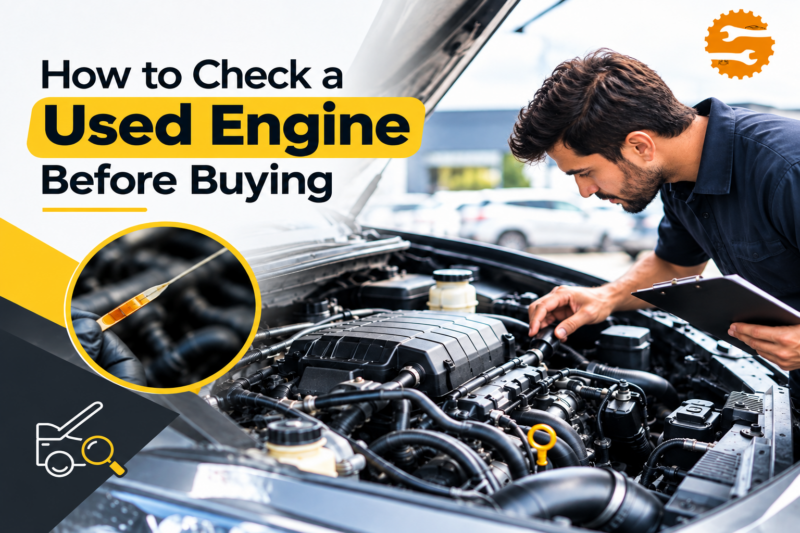
How to Check if a Used Engine Is Good Before Buying
Buying a used engine can save you a significant amount of money compared with purchasing a brand-new replacement. However, a used engine is a major investment, so it is important to know what you are buying before you make a decision. Knowing how to check a used engine before buying can help you identify potential problems, verify its condition, and choose a reliable replacement for your vehicle.
The right inspection can help you avoid an engine with hidden problems and increase your chances of getting a reliable replacement. From checking the engine’s history and mileage to inspecting the oil, cooling system, compression, and overall condition, there are several important factors to consider.
In this guide, we explain how to check a used engine before buying and what questions you should ask the seller.
1. Confirm the Engine Is Compatible With Your Vehicle
Before inspecting the condition of a used engine, first make sure it is the correct engine for your vehicle.
Check:
- Vehicle make and model
- Model year
- Engine size and configuration
- Engine code
- VIN compatibility
- Transmission compatibility
- Fuel type
- Required sensors and accessories
Two engines may look almost identical but have important differences in wiring, sensors, mounting points, electronics, or internal components.
Tip: Your vehicle’s VIN and the engine code are two of the most useful pieces of information when searching for a replacement engine.
2. Ask About the Engine’s Mileage
Mileage is one of the first things you should ask about when purchasing a used engine.
A lower-mileage engine may have experienced less wear, but mileage alone does not determine engine condition. Maintenance history and how the vehicle was driven are also important.
Ask the seller:
- What was the engine’s mileage?
- What vehicle did it come from?
- Is the mileage documented?
- Was the engine regularly maintained?
- Why was the original vehicle dismantled or scrapped?
If possible, choose an engine with a documented history rather than relying only on a verbal mileage estimate.
3. Check the Engine’s History
A good seller should be able to provide useful information about where the engine came from.
Ask for details such as:
- Donor vehicle information
- Mileage
- Engine code
- Vehicle identification information where appropriate
- Service or maintenance records, if available
- Reason the vehicle was removed from service
- Whether the engine was tested before removal
Knowing the engine’s history gives you a better idea of what you are purchasing.
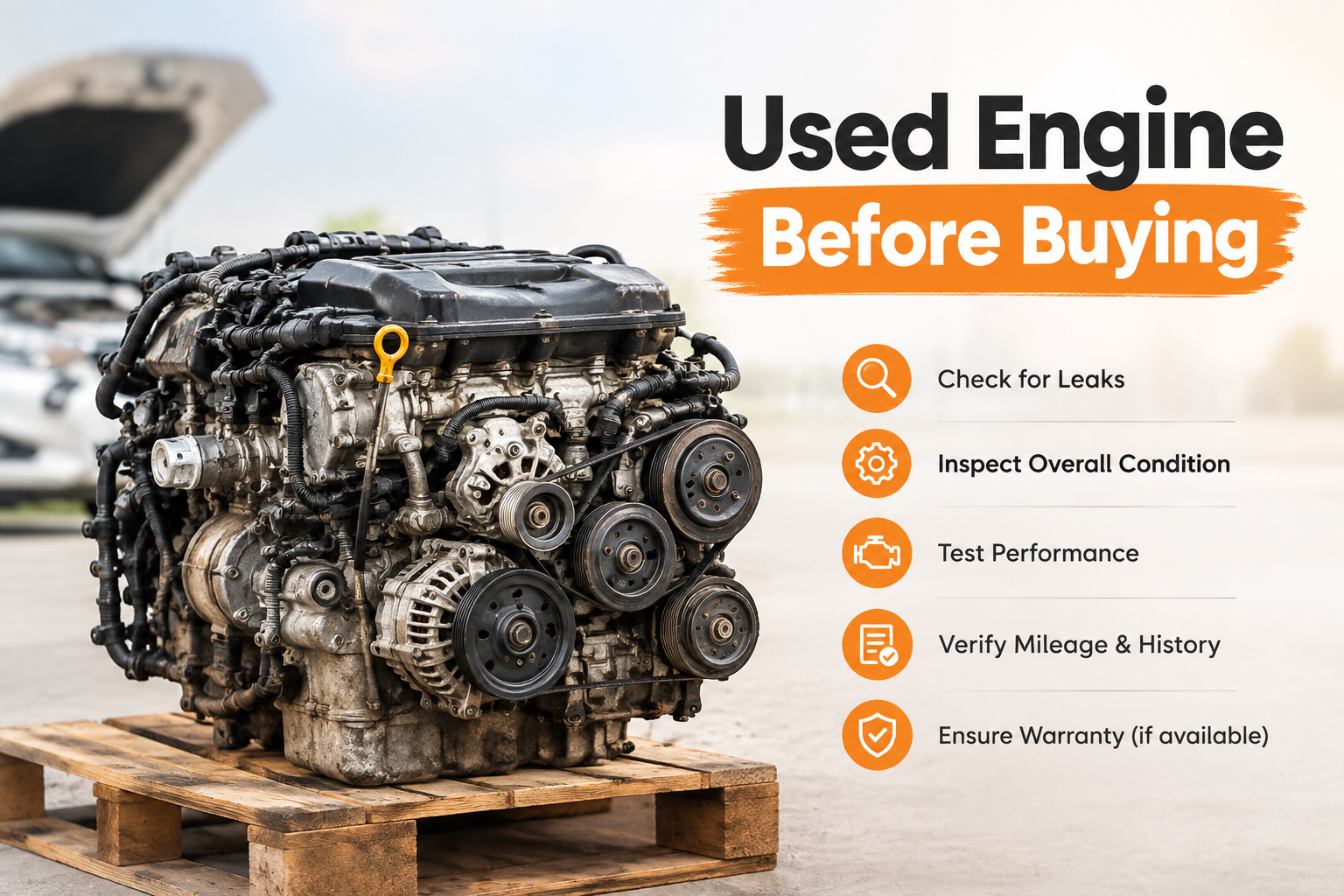
4. Inspect the Outside of the Engine
A visual inspection can reveal signs of damage or poor maintenance.
Look carefully for:
- Cracks in the engine block
- Damaged cylinder heads
- Broken mounting points
- Heavy oil leaks
- Coolant residue
- Excessive rust or corrosion
- Damaged connectors
- Missing components
- Signs of previous repairs
Some surface dirt or normal wear is expected on a used engine. However, major cracks, severe corrosion, or evidence of serious damage should be treated as warning signs.
5. Check the Engine Oil
Engine oil can tell you a lot about an engine’s condition.
Remove the oil cap and inspect the visible oil. If possible, inspect the drained oil as well.
Look for:
- Excessive metal particles
- Thick sludge
- Unusual discoloration
- Milky or creamy oil
- Signs of coolant contamination
A small amount of normal residue may not indicate a major problem, but heavy sludge or visible metal particles can be a warning sign of internal wear.
Important: Oil condition should be considered together with other inspection and testing results rather than used as the only indicator of engine health.
6. Inspect the Coolant System
If coolant is still present, check its condition.
Look for signs of:
- Oil contamination
- Rust
- Heavy deposits
- Unusual discoloration
- Coolant leaks
Oil and coolant mixing can sometimes indicate serious problems such as a damaged head gasket, cylinder head, or engine block.
7. Check for Compression
A compression test is one of the most useful ways to evaluate an engine’s internal condition.
A compression test measures the pressure produced inside each cylinder. The results can help identify potential problems involving:
- Piston rings
- Valves
- Cylinder walls
- Head gasket
- Other internal components
The most important factor is not simply whether one particular number is reached. Compression should generally be reasonably consistent between cylinders, with specifications varying by engine.
For a more detailed assessment, a mechanic may recommend a leak-down test.
8. Check Whether the Engine Turns
If the engine can be safely rotated manually, a mechanic can check whether it turns smoothly.
An engine that is difficult or impossible to rotate may have an internal mechanical problem.
However, this should be performed correctly using the appropriate procedure and tools. Do not force an engine that appears seized.
9. Look for Signs of Overheating
Overheating can cause serious engine damage.
Inspect the engine for evidence such as:
- Discoloration around the cylinder head
- Damaged hoses or components
- Cracks
- Coolant residue
- Warped components
- Excessive corrosion
- Previous repair marks
Ask whether the engine was known to have overheating issues in the donor vehicle.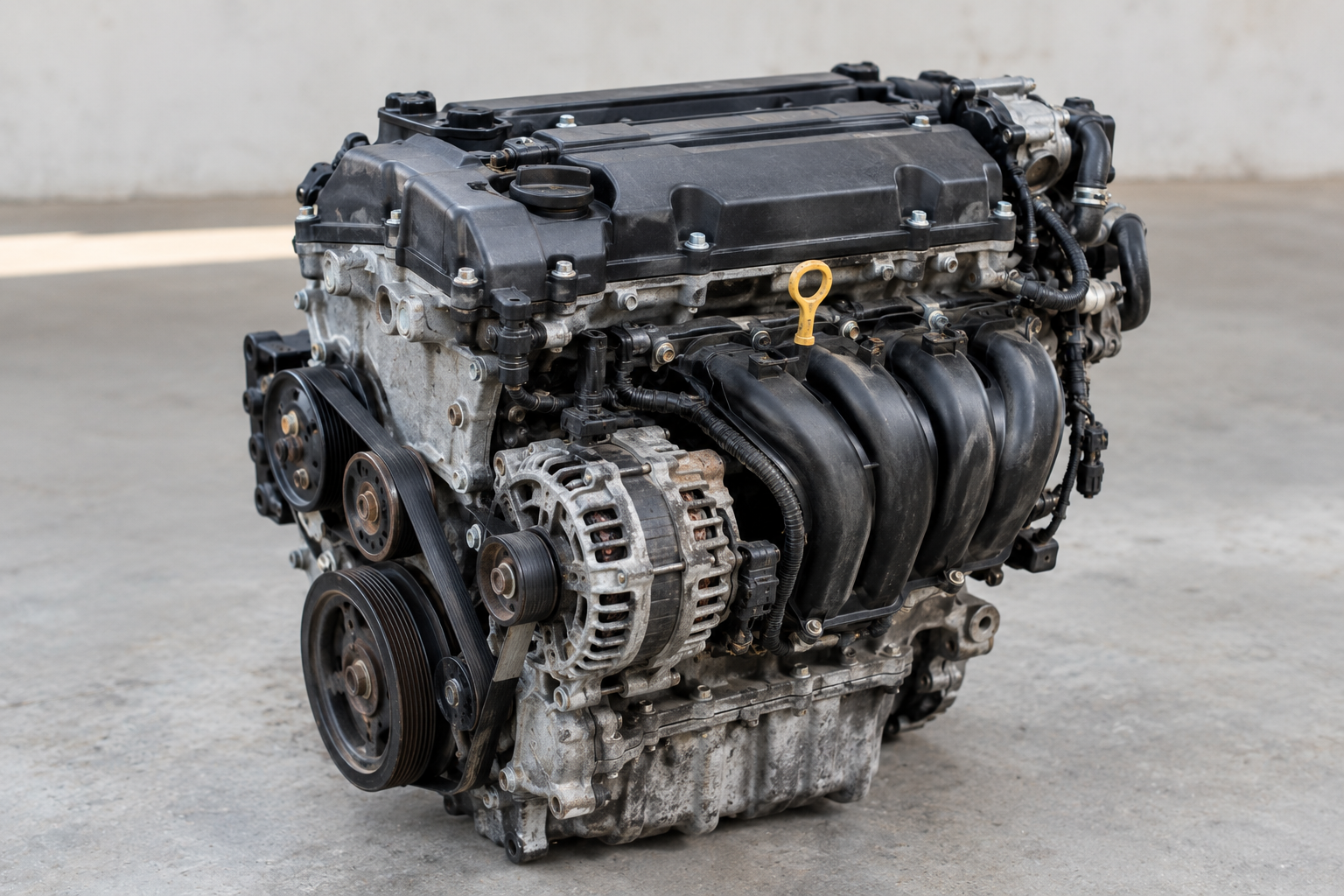
10. Inspect the Head Gasket and Cylinder Head Area
Head-gasket problems can be expensive to repair, so they are important to identify before purchase.
Possible warning signs include:
- Coolant and oil contamination
- Compression problems
- Signs of overheating
- External coolant or oil leaks
- Unusual residue around mating surfaces
A professional inspection can provide a much more reliable assessment than a visual inspection alone.
11. Check for Excessive Rust and Corrosion
Some surface corrosion is normal, particularly on engines that have been stored or removed from vehicles.
However, heavy corrosion can affect:
- Fasteners
- Electrical connectors
- Sensors
- Mounting points
- Cooling passages
- Other components
Pay particular attention to corrosion that appears severe or affects important engine components.
12. Ask Whether the Engine Has Been Tested
One of the most important questions to ask a used-engine seller is:
“Has the engine been tested?”
Depending on the seller and engine, testing may include:
- Compression testing
- Leak-down testing
- Oil-pressure testing
- Visual inspection
- Running or bench testing where practical
- Inspection for leaks and abnormal noises
Ask the seller what testing was performed and whether the results can be provided.
13. Understand What Is Included With the Engine
A second-hand engine does not always come with every component shown in photographs.
Depending on the seller, the engine may be sold as a long block, complete engine, or another configuration.
Ask whether the engine includes components such as:
- Intake manifold
- Exhaust manifold
- Fuel system components
- Alternator
- Starter
- Sensors
- Wiring
- Engine mounts
- Turbocharger, where applicable
- Other accessories
Knowing exactly what is included helps you compare prices accurately.
14. Check the Warranty
A warranty can provide important protection when buying a used engine.
Before purchasing, ask:
- How long is the warranty?
- What components are covered?
- What conditions apply?
- Is labor covered?
- What happens if the engine fails?
- Is the warranty transferable?
- Are there installation requirements?
Always read the warranty terms carefully rather than assuming every issue is covered.
15. Buy From a Reputable Seller
The seller is just as important as the engine itself.
Look for a seller that:
- Provides accurate engine information
- Clearly explains mileage
- Offers testing information
- Provides a written warranty
- Has transparent return policies
- Can verify compatibility
- Has established customer reviews or a reputation
Be cautious if a seller refuses to provide basic information or pressures you to purchase immediately.
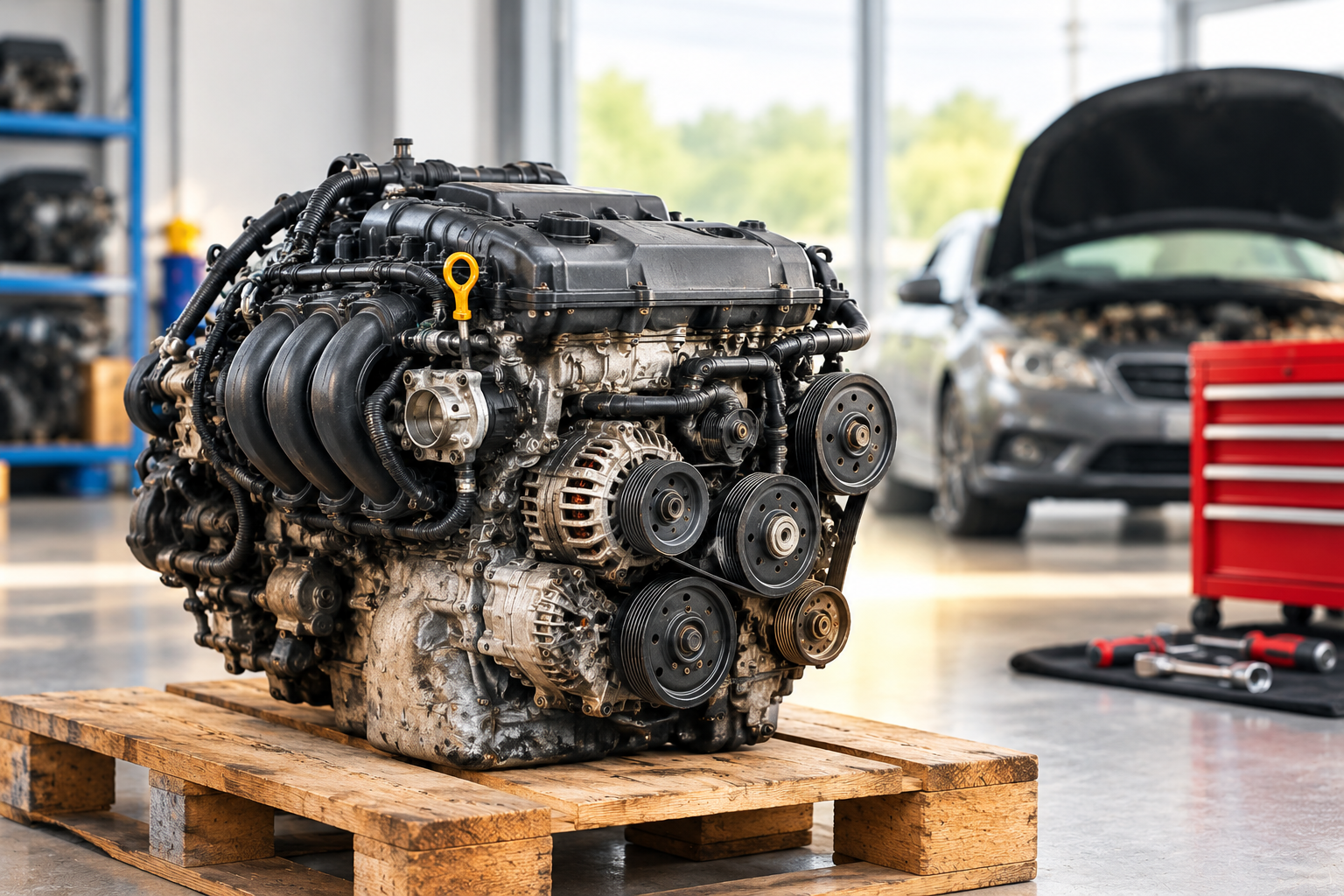
Used Engine Inspection Checklist
Before buying, use this quick checklist:
☐ Confirm make, model, year, and engine code
☐ Verify VIN compatibility
☐ Check documented mileage
☐ Ask about the donor vehicle
☐ Ask why the engine was removed
☐ Inspect the block and cylinder head
☐ Look for cracks and major corrosion
☐ Check oil condition
☐ Check coolant condition
☐ Look for signs of overheating
☐ Ask about compression testing
☐ Ask whether the engine has been tested
☐ Confirm exactly what components are included
☐ Review the warranty
☐ Check the seller’s reputation
☐ Compare the total cost, including installation
Is Buying a Used Engine a Good Option?
For many vehicle owners, a used engine can be a practical alternative to a brand-new replacement, particularly when the vehicle is otherwise in good condition.
The important thing is to purchase based on condition, compatibility, testing, history, warranty, and seller reliability—not price alone.
A properly inspected used engine from a reliable source can help you get your vehicle back on the road while potentially reducing replacement costs.
Frequently Asked Questions About Used Engines
1. Is it safe to buy a used engine?
Yes, a used engine can be a good option when its compatibility and condition are properly verified. Always check the engine’s history, mileage, testing, warranty, and seller reputation before purchasing.
2. How do I know if a used engine is good?
Check the engine’s compatibility, mileage, physical condition, oil and coolant condition, compression results, signs of overheating, and testing history. A professional inspection is recommended when possible.
3. What should I check before buying a second-hand engine?
You should check the engine code, VIN compatibility, mileage, donor vehicle history, external condition, oil, coolant, compression, signs of overheating, included components, warranty, and return policy.
4. Is lower mileage always better for a used engine?
Not necessarily. Lower mileage can be beneficial, but maintenance history, driving conditions, testing, storage, and overall engine condition are also important.
5. Should I get a compression test before buying a used engine?
Yes. A compression test can provide useful information about the condition of the engine’s cylinders and internal components. The results should be evaluated according to the manufacturer’s specifications.
6. What is an engine code and why is it important?
An engine code identifies a particular engine family or variant. It is useful for confirming compatibility because engines that appear similar can have differences in specifications, electronics, mounting, or components.
7. Does a used engine come with all accessories?
Not always. The exact components included depend on the seller and the type of engine being sold. Always confirm what is included before purchasing.
8. Should I buy a used engine based only on price?
No. The cheapest engine may not be the best option. Consider condition, mileage, testing, compatibility, warranty, seller reputation, and the total installation cost.
9. Is a warranty important when buying a used engine?
Yes. A clear warranty can provide additional protection if the engine develops a covered problem. Always understand the warranty conditions before purchasing.
10. Where can I find used engines and car parts?
You can search for used engines and other genuine used OEM car parts through Select Used Parts, which operates as a Pan-India marketplace for used automotive parts and lists engine parts among its categories.
Find the Right Used Engine for Your Car
Need a used engine car part? Don’t waste time searching through unreliable sources or choosing a part based only on price.
At Select Used Parts, you can explore a wide range of used automotive parts and find options suited to your vehicle’s requirements.
Whether you’re looking for a used engine, transmission, body part, electrical component, suspension part, or other replacement part, start your search with Select Used Parts.
Get the Right Part. Save More. Get Back on the Road.
Tell us what part you need, and find the right used part for your vehicle.
Select Used Parts — Your Trusted Destination for Quality Used Auto Parts, Fast Service, and Pan-India Delivery.