

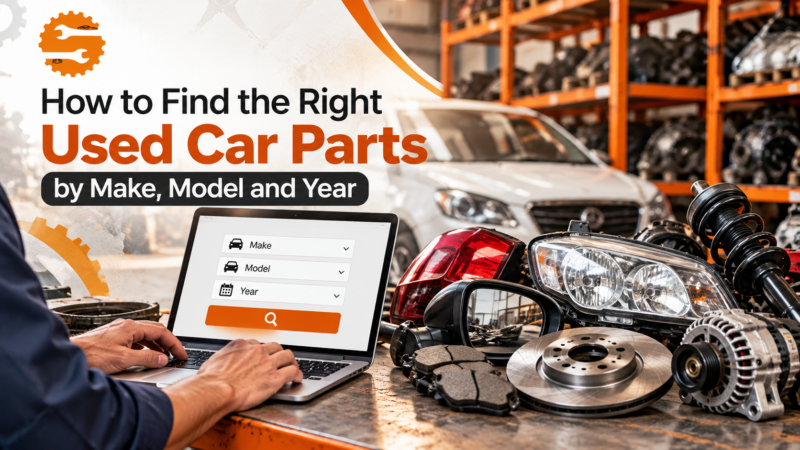
How to Find the Right Used Car Parts by Make, Model and Year
Buying the right replacement component can help reduce repair costs without compromising your vehicle’s compatibility or safety. However, finding the correct used car parts requires more than matching a product to your car’s name. Differences in engine specifications, manufacturing dates, vehicle variants and part numbers can determine whether a component fits correctly.
For car owners in India, identifying the right part before purchasing is especially important when sourcing components for older vehicles or models with multiple variants. This guide explains how to find the right used car parts by make, model and year, verify their condition and make a more informed buying decision.
Why Does Vehicle Compatibility Matter When Buying Used Car Parts?
A vehicle’s make, model and manufacturing year provide a useful starting point for finding compatible second hand car parts. However, two cars from the same model range may have different engines, electrical systems, transmission configurations or body components.
For example, a headlight designed for an earlier version of a car may have different mounting points or connectors from the facelifted version. Similarly, an engine control unit (ECU) from another variant may require different programming or may not be compatible at all.
Choosing the correct used car parts helps you:
- Reduce the risk of ordering an incompatible component.
- Avoid unnecessary replacement and installation costs.
- Identify suitable parts for older or discontinued vehicle models.
- Compare used auto parts using accurate specifications.
- Make better-informed decisions about part condition and value.
The key principle: Confirm compatibility and condition separately. A part that fits your vehicle is not automatically a part that is in good working condition.
1. Identify Your Car’s Make, Model and Manufacturing Year
Begin by recording your vehicle’s basic identification details. These help narrow your search when you find car parts by make, model and year and allow a supplier to check the correct application.
- Make: The vehicle manufacturer, such as Maruti Suzuki, Hyundai, Tata Motors, Honda or Toyota.
- Model: The specific vehicle name, such as Swift, Creta, Nexon, City or Innova.
- Manufacturing year: The year the vehicle was manufactured, rather than relying only on its registration year.
- Variant: The particular version of the model, which may have different features or mechanical specifications.
Consider a Hyundai Creta owner looking for a replacement headlight. Searching only for “Creta headlight” may return components from different generations or facelift versions. Adding the manufacturing year and variant helps narrow the results, although the part number and fitment still need confirmation.
When searching for car spare parts, these details become particularly useful for older vehicles because manufacturers may introduce component changes during a model’s production cycle.
2. Verify the Engine and Transmission Specifications
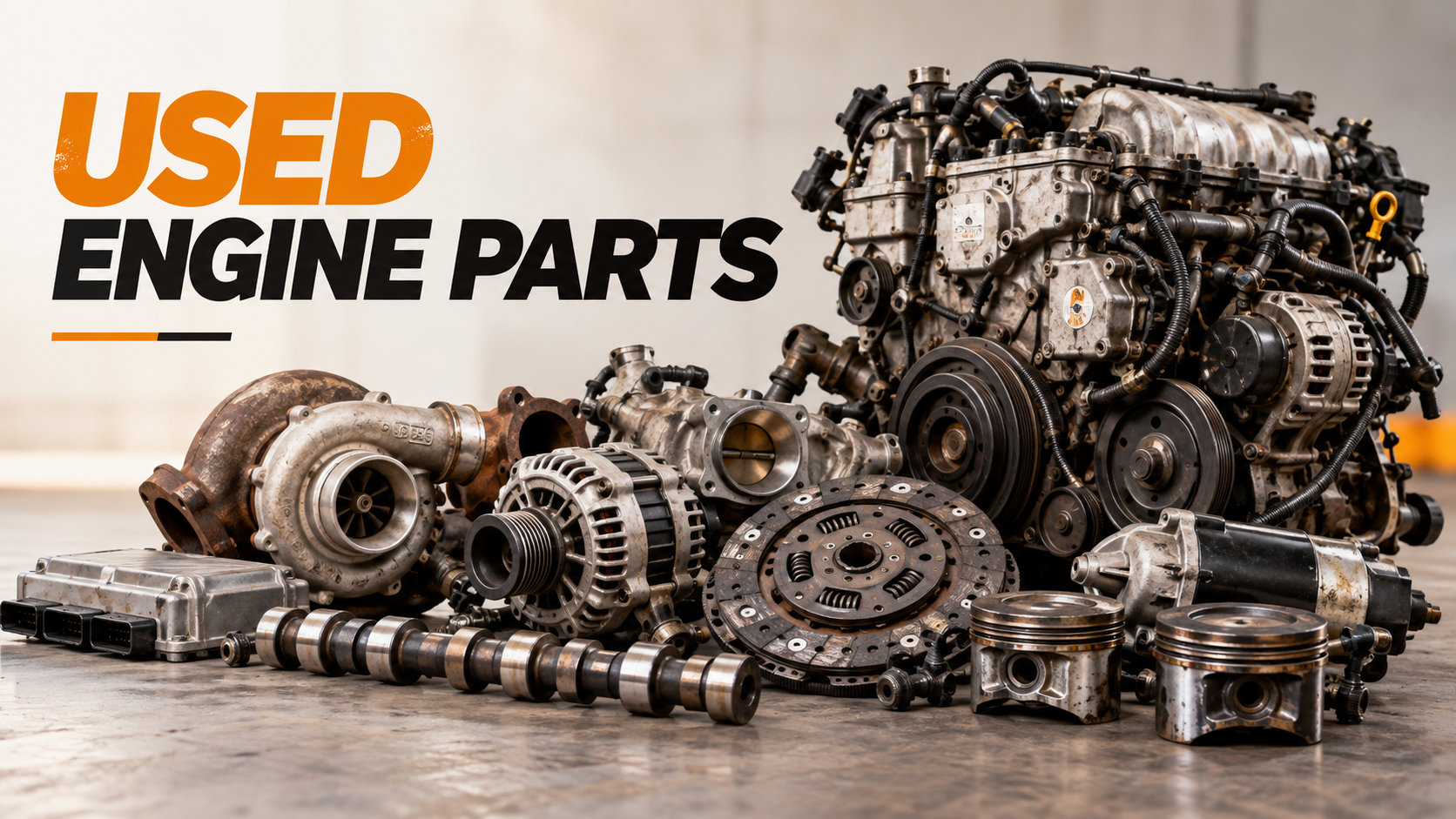
Engine and transmission compatibility is especially important when purchasing major mechanical components or searching for used engine parts.
The same car model may be available with different engine capacities, fuel types and gearbox configurations. Parts that look similar may have different mounting arrangements, connections or operating specifications.
Before purchasing an engine or gearbox, confirm:
- Engine code and capacity.
- Petrol, diesel, CNG or hybrid configuration, as applicable.
- Manual or automatic transmission type.
- Vehicle variant and drivetrain configuration.
- Relevant part or assembly number.
For example, a replacement engine intended for one variant may not be a direct fit for another version of the same model. Additional differences in wiring, sensors, mounts or control systems may affect installation.
Ask the supplier to confirm the application and what is included with the assembly. For a used engine, also request available inspection or testing information, evidence of its condition and applicable warranty terms.
A qualified mechanic should verify the replacement before installation, particularly when the component affects engine management, braking or other safety-critical systems.
3. Use Your VIN or Chassis Number for Better Identification
Your vehicle identification number (VIN) can help establish the vehicle’s exact identity and configuration. In India, the chassis number is also commonly used when identifying a vehicle.
You can usually find vehicle identification details in your registration certificate (RC), on the vehicle’s identification plate or in the manufacturer’s documentation.
A VIN number for car parts identification is particularly useful when:
- Multiple variants share the same model name.
- A component changed during a model-year update.
- You need an electronic module or engine-related component.
- Your original part number is missing or unreadable.
- You are considering a component from a different production year.
Provide the VIN or chassis details to a supplier who can check appropriate manufacturer records or parts catalogues. Not every seller has access to the same vehicle data, so ask how compatibility is being verified.
Important: A VIN is a useful identification tool, not an automatic guarantee that a particular used part will fit. The supplier should still confirm the component’s application and relevant part number.
4. Match the Original Equipment Part Number
When available, the original equipment (OE) part number is one of the most useful references for identifying a replacement component. Checking the OEM part number or its recognised equivalent can help you avoid ordering a similar-looking but incompatible item.
The number may be printed on a label, stamped on a metal surface or moulded into a component’s casing. Its location depends on the type of part.
Before purchasing, follow these steps:
- Locate the number on your original component, if accessible.
- Record the complete reference, including any suffixes.
- Ask the supplier to confirm whether the replacement carries the same number or an officially recognised alternative.
- Check whether any differences affect fitment, connectors or vehicle configuration.
- Confirm the part’s condition and included fittings separately.
Part-number verification can be especially helpful for ECUs, alternators, starter motors, sensors, lighting assemblies and transmission components.
Two components can look almost identical but have different specifications. Likewise, a different part number does not always mean incompatibility, because manufacturers sometimes supersede older references. Verify any claimed interchangeability rather than relying on appearance alone.
5. Know What to Check for Different Used Car Parts
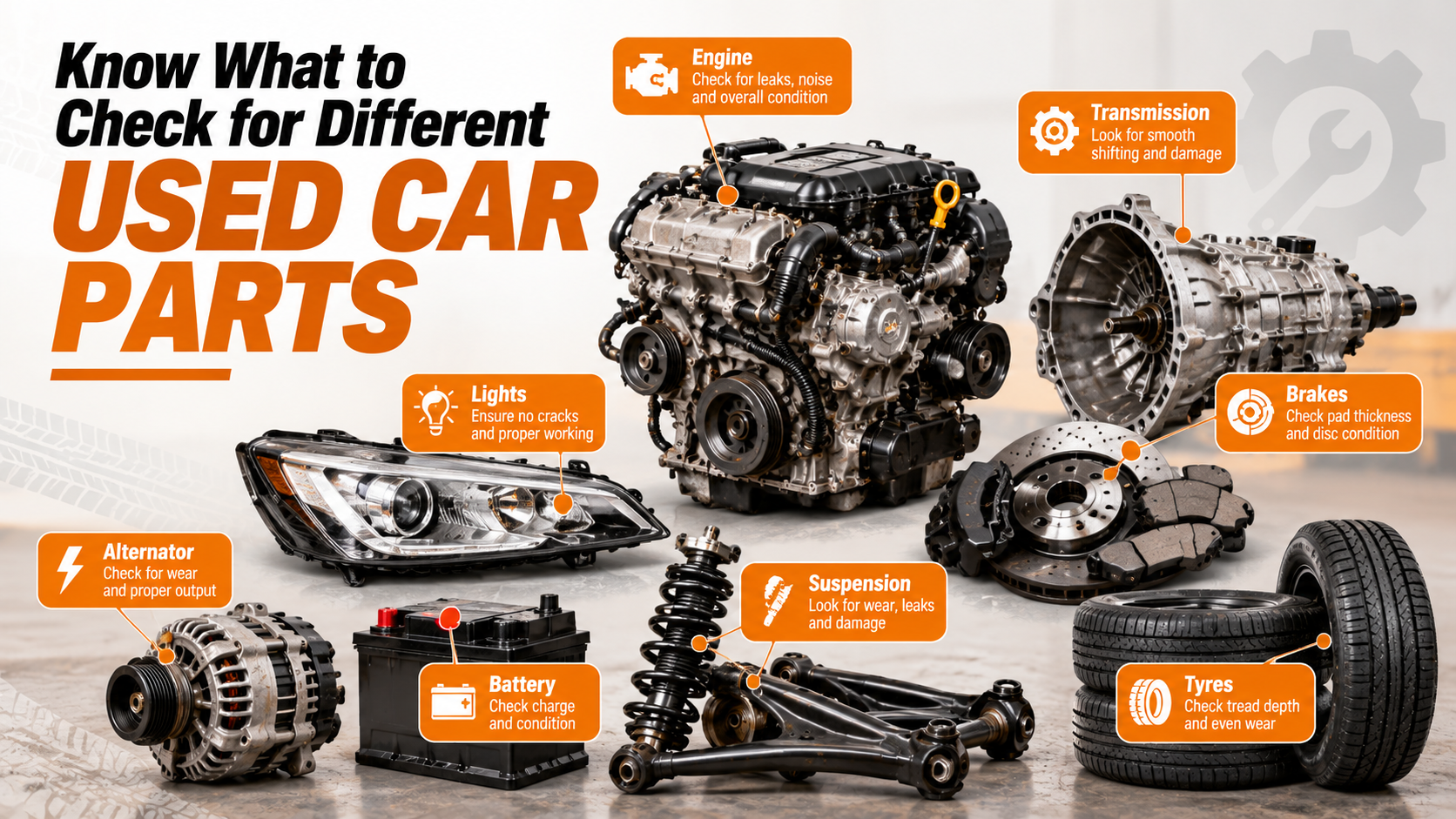
Each component has its own compatibility requirements and condition checks. Understanding these differences can help you choose the right used car parts and ask more useful questions before ordering.
Used Engines
Confirm the engine code, fuel type, capacity and vehicle application. Ask about available testing, visible leaks, compression or other relevant inspection results, and the warranty provided.
Used Gearboxes and Transmissions
Check the gearbox code, transmission type, engine compatibility and drivetrain configuration. Ask about the unit’s reported operating condition and any known faults.
Used Body Parts
For doors, bumpers, mirrors and panels, verify the model generation, mounting points, side and dimensions. Check for cracks, corrosion, previous repairs and missing fittings.
Used Headlights and Tail Lights
Confirm the correct facelift version, connector arrangement, mounting points and lighting configuration. Inspect the lens, housing, adjusters and electrical connections.
Used Electrical Components
For ECUs, alternators, sensors and starter motors, verify the part number, electrical specifications and connectors. Some electronic modules require coding or programming after installation.
Used Brakes, Steering and Suspension Components
Confirm the exact vehicle application and condition. These systems directly affect vehicle control and road safety. Do not assume that a used component is suitable simply because it fits; follow manufacturer guidance and seek a qualified mechanic’s assessment.
6. Assess the Condition Before You Buy
A compatible part can still be unsuitable if it is damaged, excessively worn or improperly repaired. This is why checking condition is just as important as checking fitment when buying used car parts online.
Before placing an order, request clear photographs of the actual item and ask the supplier what inspections have been completed.
Look for:
- Cracks, corrosion, dents or other visible damage.
- Signs of leakage, overheating or previous repairs.
- Damaged electrical connectors, threads or mounting points.
- Missing brackets, fasteners or associated components.
- Available test results, inspection records or service history.
Visual inspection alone cannot establish the internal condition of every mechanical or electrical component. Engines, gearboxes and electronic modules may require appropriate testing by a qualified technician.
Also review the seller’s warranty, return policy and delivery terms before paying. Confirm whether the warranty covers the specific part, whether installation requirements apply and what exclusions may affect a claim.
Transparent information about a component’s condition helps buyers compare available used auto parts more confidently.
7. Compare the Total Cost, Not Just the Part Price
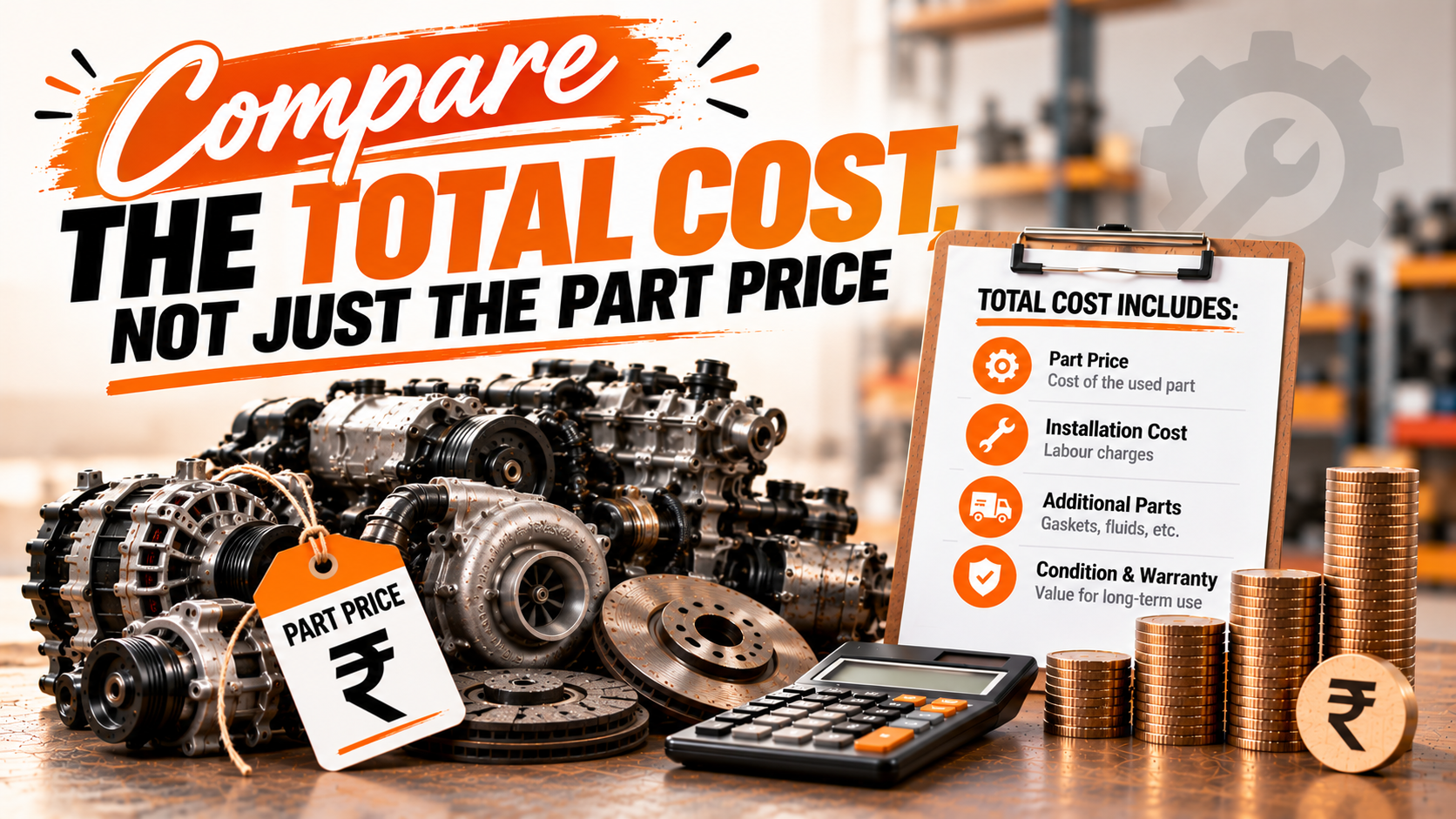
A lower purchase price does not necessarily mean a lower overall repair cost.
When comparing used car parts online, consider the purchase price alongside delivery charges, inspection expenses, installation labour and any required programming or additional fittings.
For example, a used ECU may appear affordable, but coding or immobiliser-related configuration could add to the installation cost. A replacement gearbox may also require additional seals, fluids or labour.
Before deciding, ask the supplier or mechanic:
- Is the quoted price for the complete assembly or only part of it?
- Are connectors, brackets and necessary fittings included?
- Will additional programming or calibration be required?
- What warranty or return options are available?
- Is the component suitable for the intended repair?
Comparing these factors gives you a clearer picture of the likely total expense and helps prevent unexpected costs.
8. Use a Pre-Purchase Checklist
Before ordering any second hand car parts, confirm the essential details.
- Make, model and manufacturing year are correct.
- Engine type, variant and transmission have been identified where relevant.
- VIN or chassis information has been checked when necessary.
- The OE part number or recognised alternative has been verified.
- The actual component’s condition has been reviewed.
- Required connectors, brackets and fittings are included.
- Testing information and known defects have been discussed.
- Warranty, return, delivery and installation terms are understood.
- A qualified mechanic has confirmed suitability for safety-critical or complex components.
If any important detail remains uncertain, request written confirmation before completing the purchase.
Find Suitable Used Car Parts with SelectUsedParts
Finding the right replacement component can take time, particularly when sourcing parts for an older car or a model with several variants.
SelectUsedParts provides an online marketplace for sourcing used automotive components in India. Its available listings and categories can help buyers explore replacement options across different vehicle component types.
To make your search more effective, keep your vehicle details ready, identify the component you need and provide the relevant part number wherever possible. Before purchasing, confirm the listing’s vehicle application, condition, warranty and return terms with the seller.
Visit SelectUsedParts to explore available used auto parts and begin your search for a suitable replacement.
Frequently Asked Questions
1. How do I find the correct used car parts?
Match your car’s make, model, manufacturing year, variant and relevant part number.
2. Can I use parts from a different model year?
Sometimes. Verify the part number and vehicle compatibility before purchasing.
3. Can a VIN identify compatible car parts?
Yes, it can help identify vehicle specifications, but the part still requires fitment verification.
4. Where can I find my car’s part number?
Check the label, stamp or engraving on the original component.
5. Are used car parts reliable?
They can be suitable when compatibility, condition and testing are properly verified.
6. What should I check before buying used car parts online?
Confirm fitment, condition, photographs, warranty, return terms and delivery details.
7. Do used car parts come with a warranty?
Warranty coverage varies by seller and component. Confirm the applicable terms before buying.
8. Should a mechanic inspect used car parts?
Yes, especially for engines, transmissions, brakes, steering and other safety-critical components.
Final Takeaway
Finding the correct used car parts starts with accurate vehicle identification and ends with verified compatibility, condition and purchase terms. Check the make, model, year, variant and relevant part number before ordering, and seek professional guidance when a component requires specialist inspection or installation.
A few careful checks before purchasing can help reduce avoidable expenses, prevent compatibility problems and make your vehicle repair decision more informed.
If you are looking for a replacement component, visit SelectUsedParts to explore available used auto parts and request the part that matches your vehicle’s requirements.