

10 Dashboard Warning Lights You Should Never Ignore
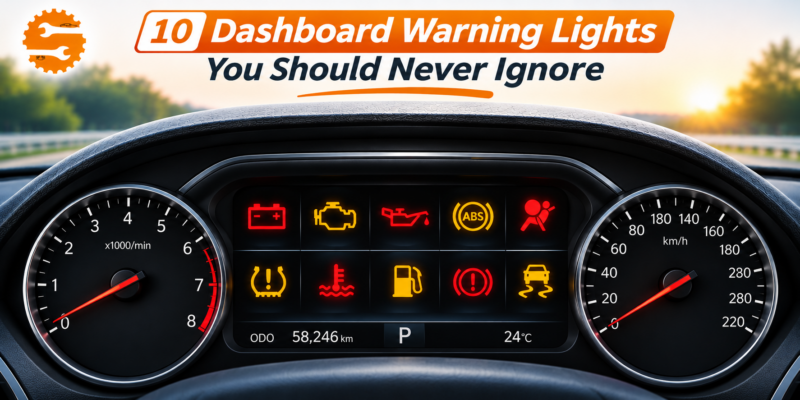
Have you ever noticed a warning symbol suddenly appearing on your car’s dashboard while driving? These car dashboard warning lights are not just indicators; they are an important part of your vehicle’s safety and monitoring system. They alert drivers to potential problems involving the engine, brakes, battery, tyres and other essential components.
Ignoring a dashboard warning light can turn a minor issue into an expensive repair. For example, continuing to drive with low engine oil pressure can cause serious engine damage, while overlooking a brake system warning may compromise your vehicle’s stopping ability.
Understanding dashboard warning lights and meanings, why they appear and how to respond can help you make informed decisions about vehicle maintenance. In this guide, we explain 10 important car dashboard symbols every car owner should recognise.
1. Engine Oil Pressure Warning Light
Low oil pressure means the engine may not be receiving sufficient lubrication to protect its internal components. This can happen due to low oil levels, oil leaks, a failing oil pump or a blocked oil filter.
What should you do?
- Stop the vehicle in a safe location and switch off the engine.
- Check the engine oil level after allowing the engine to settle.
- Look for visible oil leaks.
- If the warning remains, get professional assistance before driving again.
Why it matters: Insufficient oil pressure can damage essential engine components, including bearings, pistons and the crankshaft.
2. Engine Temperature Warning Light
This engine temperature warning light indicates that the engine coolant temperature is too high. An overheating engine can result from coolant leakage, a faulty radiator, a damaged thermostat, a failing water pump or a malfunctioning cooling fan.
What should you do?
- Pull over safely as soon as possible.
- Switch off the engine and allow it to cool.
- Never open the radiator cap while the engine is hot.
- Check the coolant level only after the engine has cooled.
- Get the cooling system inspected if the warning persists.
Why it matters: Prolonged engine overheating can damage the cylinder head gasket, cylinder head and other engine components.
3. Check Engine Warning Light
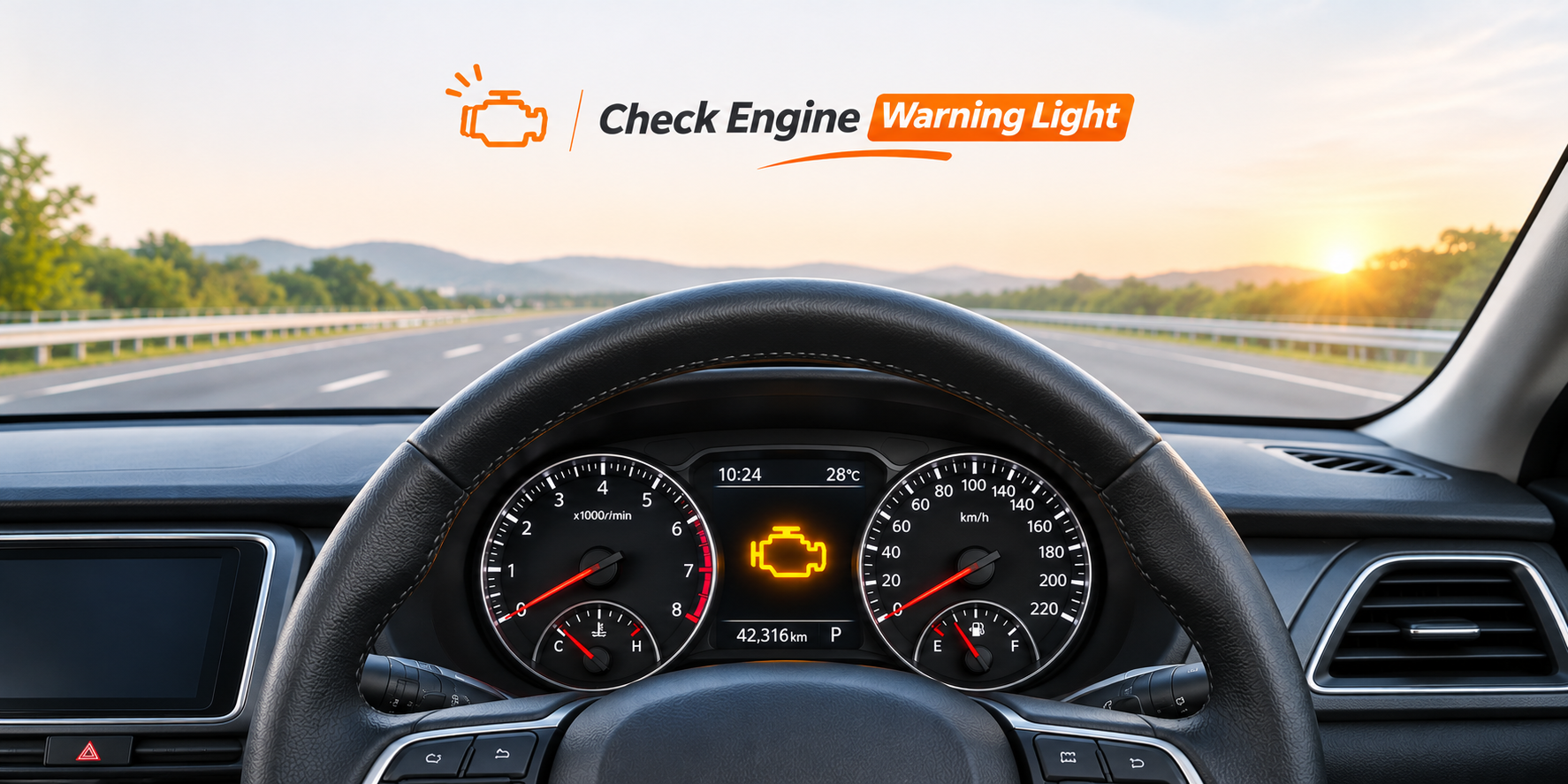
The check engine light indicates that the vehicle’s engine management or emission control system has detected a problem. It can appear due to a faulty oxygen sensor, loose fuel cap, ignition coil failure, spark plug problems or catalytic converter issues.
What should you do?
- Check whether the fuel cap is properly tightened.
- Notice any unusual engine sounds, vibrations or performance changes.
- Get the vehicle scanned using an OBD-II diagnostic tool.
- If the light flashes, reduce load, stop driving when safe and arrange immediate inspection.
Why it matters: Ignoring this warning may increase fuel consumption, emissions and the risk of further engine damage.
4. Battery Warning Light
The car battery warning light generally indicates a problem with the vehicle’s charging system. Although it is commonly associated with the battery, the actual issue may involve the alternator, drive belt, battery terminals or electrical connections.
What should you do?
- Check for loose or corroded battery connections.
- Look for unusual electrical behaviour, such as dim headlights.
- Avoid unnecessary electrical loads.
- Get the battery and alternator charging system tested.
Why it matters: A faulty charging system can cause the battery to lose charge, eventually leaving the vehicle unable to start or operate properly.
5. Brake System Warning Light
The brake system warning light is one of the most important safety indicators. It may illuminate when the parking brake is engaged, brake fluid is low or a fault is detected in the braking system.
Common causes include brake fluid leakage, worn brake components and problems with the brake hydraulic system.
What should you do?
- Check whether the parking brake is fully released.
- If the light remains on, stop safely.
- Look for signs of brake fluid leakage.
- Avoid driving if the brake pedal feels soft or braking performance changes.
- Have the braking system inspected by a qualified mechanic.
Why it matters: Brake system problems can affect stopping distance and overall vehicle control.
6. ABS Warning Light
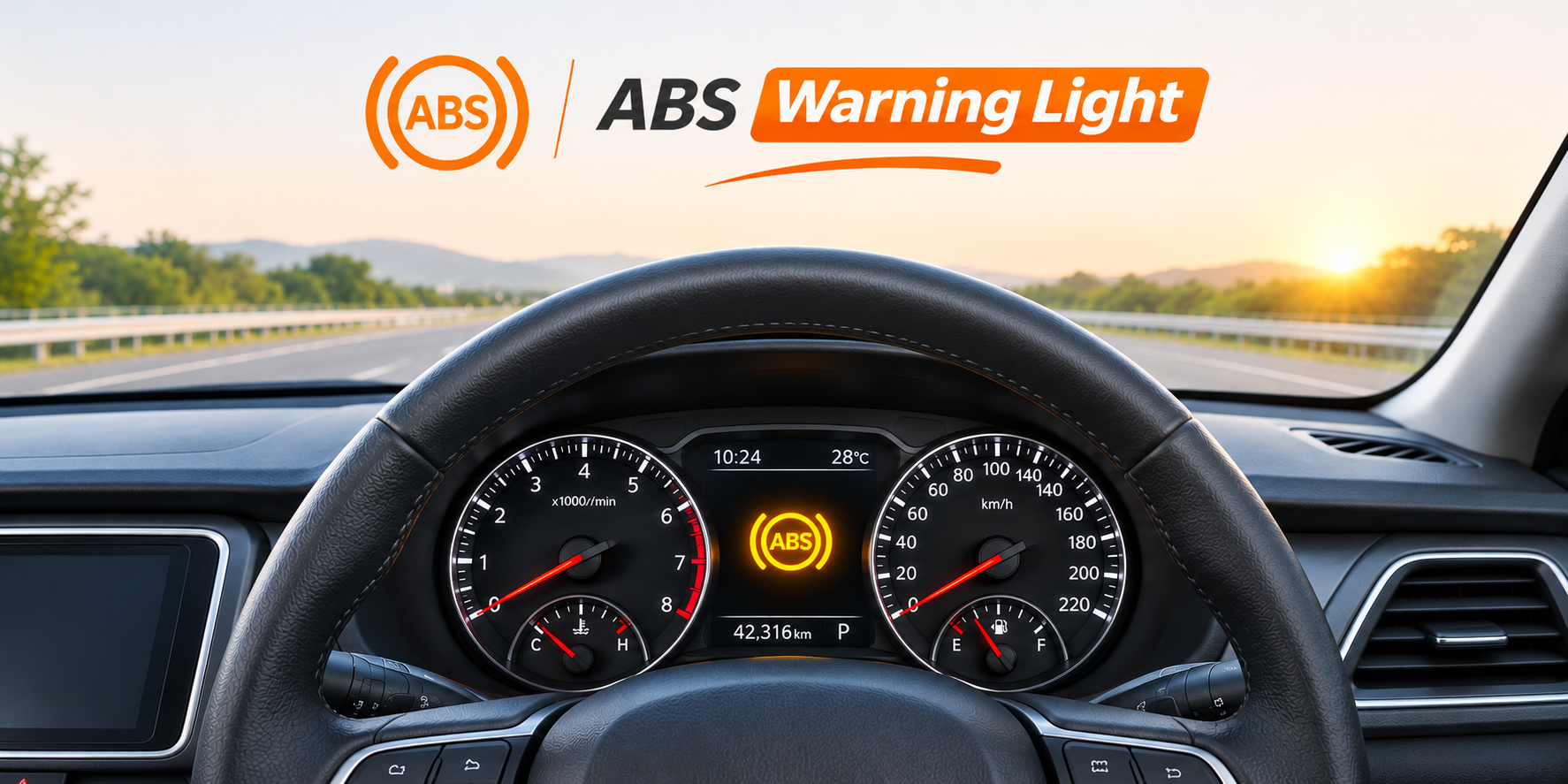
ABS stands for Anti-lock Braking System. It helps prevent the wheels from locking during hard braking, allowing drivers to maintain better steering control.
When the ABS warning light stays illuminated, it indicates a possible fault in the system.
Common causes include:
- Faulty wheel speed sensors.
- Damaged ABS wiring.
- Problems with the ABS control module.
- Malfunctioning ABS pump.
What should you do?
- Get the ABS system diagnosed.
- Have the wheel speed sensors and electrical connections checked.
- Drive cautiously and maintain a safe following distance.
- If the red brake warning light also appears, stop safely and seek assistance.
Why it matters: A malfunctioning ABS system may reduce braking stability during emergency stops, particularly on slippery roads.
7. Airbag Warning Light
The airbag warning light indicates a potential problem with the Supplemental Restraint System (SRS). This system includes airbags, crash sensors, seatbelt pretensioners and related electrical connections.
Possible causes include faulty crash sensors, damaged wiring, loose connections or an issue with the airbag control module.
What should you do?
- Get the SRS system checked using suitable diagnostic equipment.
- Avoid attempting to repair airbag wiring yourself.
- Do not ignore the warning, even if the vehicle drives normally.
Why it matters: A faulty airbag system may prevent airbags or seatbelt pretensioners from functioning correctly during an accident.
8. Tyre Pressure Monitoring System (TPMS) Warning Light
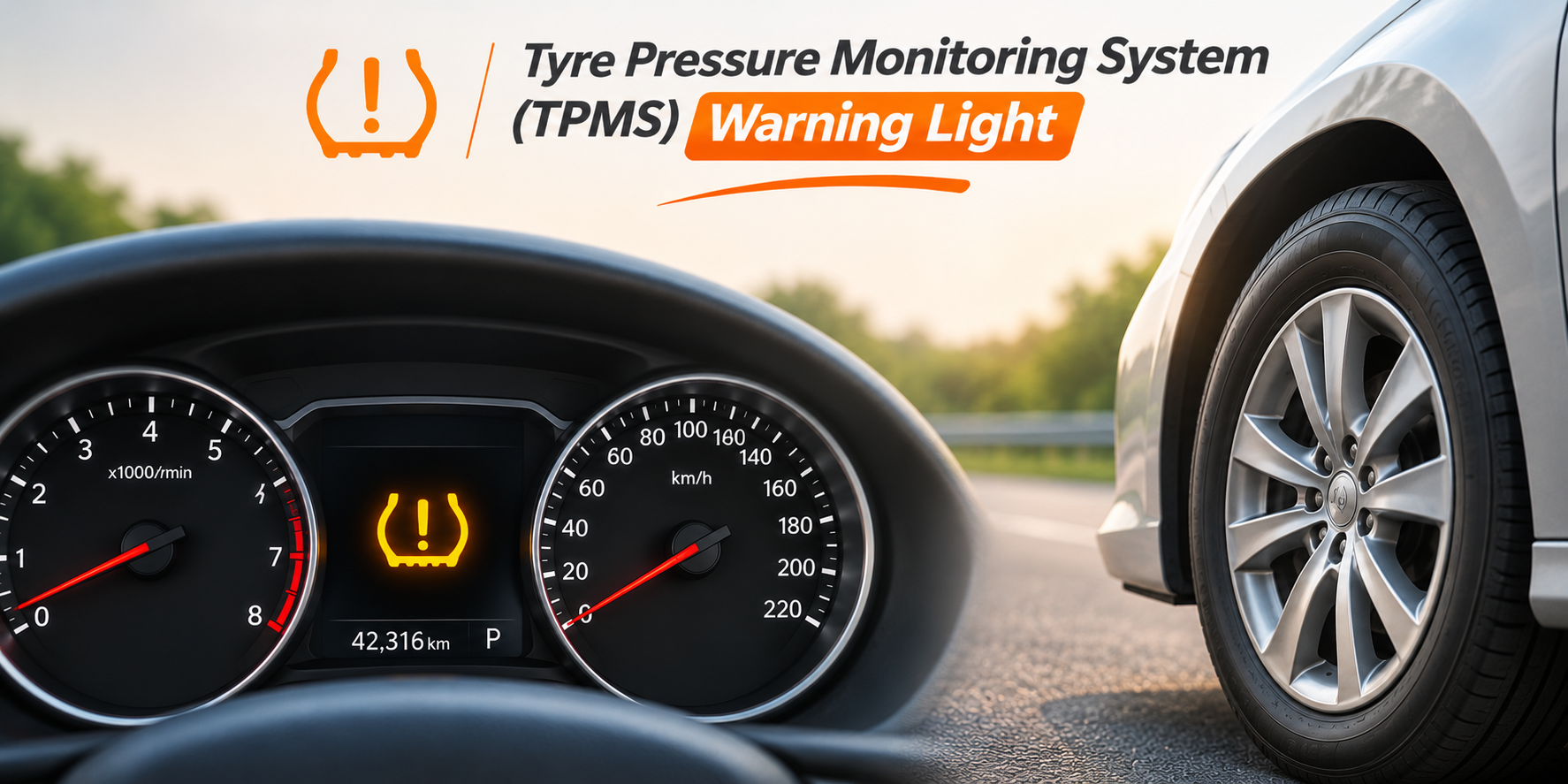
The TPMS warning light alerts drivers when one or more tyres have significantly low air pressure. Some vehicles also display individual tyre pressure readings.
Common causes include punctures, slow air leaks, temperature-related pressure changes or faulty tyre pressure sensors.
What should you do?
- Check the pressure of all four tyres using a reliable pressure gauge.
- Inflate them according to the manufacturer’s recommended pressure.
- Inspect tyres for punctures, cuts or visible damage.
- Get the TPMS sensors checked if the warning continues.
Why it matters: Incorrect tyre pressure can affect braking, handling, fuel efficiency and tyre life.
9. Transmission Temperature Warning Light
The transmission temperature warning light indicates that the transmission fluid temperature has become excessively high. It is commonly found in vehicles with automatic transmissions and may signal overheating or a transmission system problem.
Common causes:
- Low transmission fluid levels.
- Old or contaminated transmission fluid.
- Heavy towing or prolonged driving under high load.
- Faulty transmission cooling system.
What should you do?
- Stop safely and allow the transmission to cool.
- Avoid heavy acceleration and towing.
- Check transmission fluid according to the manufacturer’s instructions.
- Get the transmission system inspected if the warning remains.
Why it matters: Excessive transmission heat can damage internal gears, clutch components and other transmission parts, leading to expensive repairs.
10. Power Steering Warning Light
The power steering warning light indicates a possible problem with the system that assists steering. In vehicles with Electric Power Steering (EPS), the warning may appear due to electrical faults, sensor problems, low system voltage or a malfunctioning steering motor.
In hydraulic power steering systems, low fluid levels, leaks or pump problems may cause steering difficulties.
What should you do?
- Check whether the steering feels unusually heavy.
- Look for signs of fluid leakage in hydraulic systems.
- Have the steering system and electrical connections inspected.
- Avoid driving if steering control becomes difficult.
Why it matters: Power steering problems can make vehicle handling difficult, particularly at low speeds and during parking.
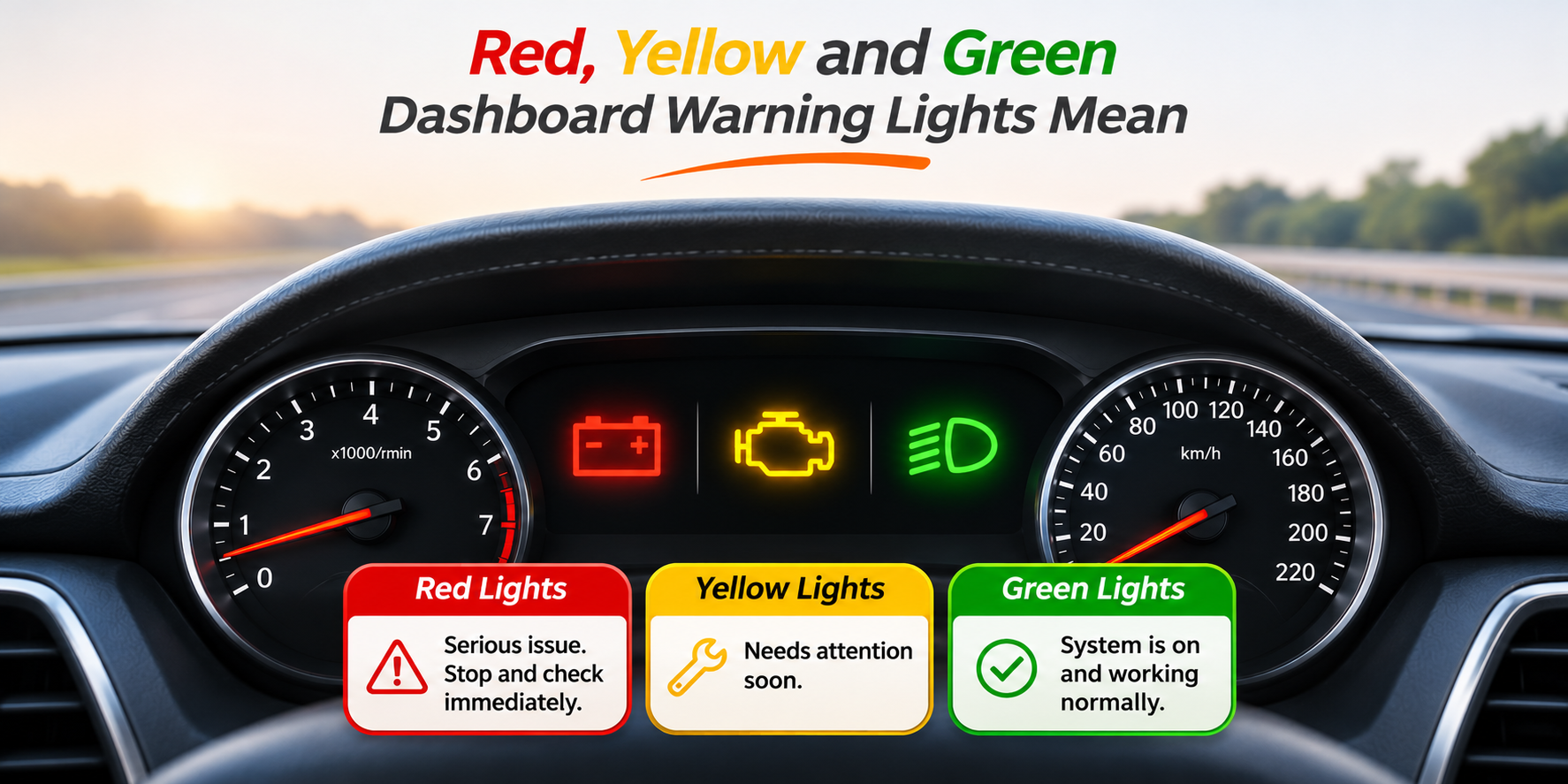
What Do Red, Yellow and Green Dashboard Warning Lights Mean?
Car dashboard warning lights are generally colour-coded to help drivers understand the urgency of a situation.
Red Warning Lights – Immediate Attention
Usually indicate a serious issue that may require stopping the vehicle safely. Examples include oil pressure, engine temperature and brake system warnings.
Yellow or Amber Warning Lights – Get It Checked
Indicate a detected fault or condition that needs attention. Examples include check engine, ABS and tyre pressure warnings.
Green or Blue Indicator Lights – System Status
Generally indicate that a vehicle function is active, such as headlights, fog lamps or high beams.
Important: Warning light colours and operating behaviour can vary between manufacturers and vehicle models. Always follow the instructions in your vehicle owner’s manual.
How to Prevent Dashboard Warning Lights from Appearing
Not every dashboard warning light can be prevented, but regular vehicle maintenance can help identify potential problems before they become serious.
Here are some practical car maintenance tips:
- Check engine oil regularly: Maintain the recommended oil level and follow the manufacturer’s replacement schedule.
- Inspect the cooling system: Monitor coolant levels and check for leaks in hoses, radiators and connections.
- Maintain your battery: Check battery terminals, charging performance and overall battery condition.
- Inspect the braking system: Monitor brake fluid levels, brake pads, discs and hydraulic components.
- Maintain correct tyre pressure: Check tyre pressure regularly, especially before long journeys.
- Follow scheduled servicing: Get important mechanical and electrical components inspected at recommended intervals.
Frequently Asked Questions (FAQs)
1. What are the most common car dashboard warning lights?
Check engine, oil pressure, battery, ABS, brake and tyre pressure warning lights are among the most common.
2. What does a flashing check engine light mean?
It may indicate an engine misfire that requires immediate attention to prevent further damage.
3. Why does the battery warning light turn on while driving?
It usually indicates a charging system problem, often related to the alternator, battery or wiring.
4. Can I drive with the ABS warning light on?
Normal braking may still work, but the anti-lock braking function may be unavailable. Get it inspected promptly.
5. Why does the engine temperature warning light come on?
It usually indicates overheating caused by low coolant, a faulty thermostat, radiator or cooling fan.
6. Do dashboard warning lights indicate faulty car parts?
They can indicate a system fault, but proper diagnosis is needed to identify the exact component.
7. How can I reset dashboard warning lights?
Fix the underlying problem first. A diagnostic scanner may be needed to clear the stored fault codes.
Keep Your Car Running at Its Best!
Pay attention to dashboard warning lights, identify problems early and choose the right replacement components. Recognising these symbols and responding promptly can help prevent expensive repairs, protect important vehicle components and improve road safety.
Never ignore a warning simply because your car appears to be running normally. Some mechanical and electrical problems may not produce noticeable symptoms until the damage becomes more serious.
If a faulty component needs replacement, make sure you choose the correct part according to your vehicle’s make, model, year and specifications.
Need the Right Replacement Car Part?
Dashboard warnings can indicate problems with important vehicle components. Choose the correct replacement part to keep your car running safely and efficiently.
Looking for OEM used car parts? Connect with Select Used Parts for your car spare parts requirements.
Send us your requirements today, and our team will help you find the right parts for your vehicle.